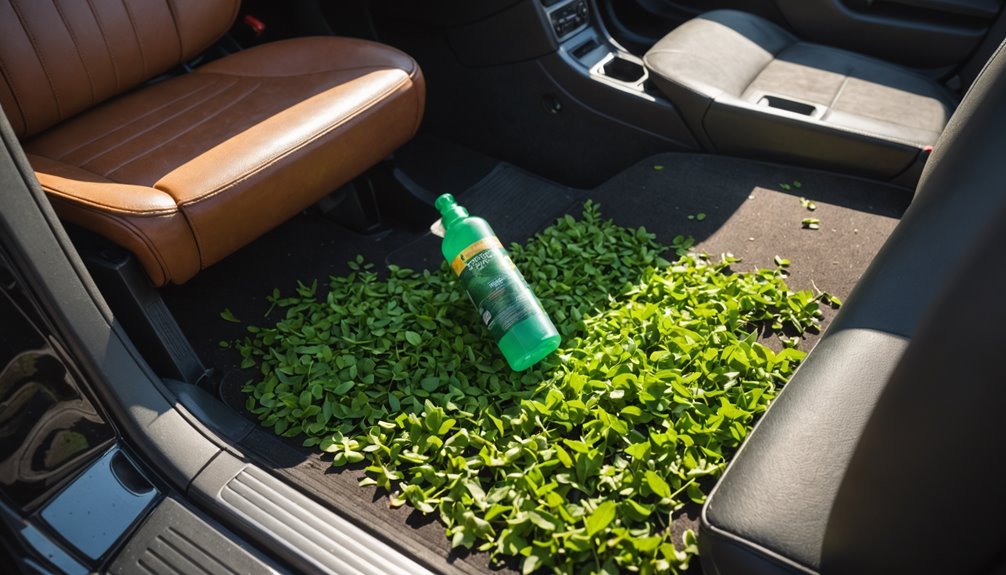
If you’ve discovered ants invading your car, it’s time to take action. First, you need to pinpoint where they’re coming from. Once you figure that out, a thorough cleaning is essential to remove any tempting crumbs. But it doesn’t stop there—there are effective repellents and baits you can employ. Curious about the best methods to keep your car ant-free? Let’s explore the steps you can take to tackle this issue.
Key Takeaways
- Identify the source of the infestation by checking for nests, food crumbs, and entry points in the car.
- Thoroughly clean the car by removing trash, vacuuming surfaces, and wiping down to eliminate food sources.
- Use natural repellents like vinegar-water spray or essential oils to deter ants from returning.
- Apply ant baits strategically near food sources to disrupt the antsactivity and reduce their numbers.
- Seal any gaps around windows, doors, and the trunk to prevent future ant entry into the car.
Identify the Source of the Ant Infestation
Have you ever wondered where those pesky ants in your car are coming from? Identifying the source of the ant infestation is the first step to reclaiming your vehicle.
Start by checking your car’s exterior, especially near the wheels and undercarriage. Ants often nest in the soil nearby, seeking food or shelter.
Next, inspect your interior closely. Look for any hidden crumbs or spills that could be attracting them. Pockets, under the seats, and the center console are common hiding spots.
Pay attention to entry points too—gaps in windows, doors, or even the trunk can serve as gateways. If you spot a trail of ants, follow it outside to trace it back to their colony.how-to-jump-car
Once you pinpoint where they’re coming from, you’ve taken the essential first step in eliminating them from your car for good. Staying vigilant will help prevent future infestations.
Clean Your Car Thoroughly
A thorough cleaning is essential for banishing ants from your car. Start by removing all trash, food wrappers, and any leftover snacks that might attract these pesky insects. Next, vacuum your seats, floor mats, and crevices to pick up crumbs and debris. Don’t forget to clean underneath the seats!
Here’s a quick checklist to guide your cleaning process:
| Step | Action | Purpose |
|---|---|---|
| Declutter | Remove all items | Eliminate food sources |
| Vacuum | Seats & floors | Remove crumbs and debris |
| Wipe Surfaces | Clean interior surfaces | Deter ants from returning |
Once you’ve completed these steps, you’ll greatly decrease the likelihood of an ant infestation while enjoying a cleaner car. Regular maintenance is key to keeping ants at bay!
Use Natural Repellents
Natural repellents can be an effective way to keep ants out of your car without resorting to harsh chemicals. You can easily use common household items like vinegar, essential oils, or citrus peels.
Start by mixing equal parts of vinegar and water in a spray bottle. Spray it around your car’s entrance and other areas where you’ve spotted ants. The strong scent will deter them.how-much-does-it-cost-to-wrap-your-car
Essential oils like peppermint, tea tree, or lavender are also great options. Just mix a few drops with water in a spray bottle and apply it to your car’s interior and exterior.
Citrus peels, including oranges or lemons, can act as a natural repellent too. Simply place some peels in your car, and the scent will help keep ants away.
Apply Ant Baits or Traps
Consider applying ant baits or traps as a targeted method to eliminate ants in your car. These baits attract ants, allowing them to consume poison that disrupts their ability to function and reproduce.
Place them in strategic locations, such as near the food sources or areas where you’ve spotted ants.
Choose baits specifically designed for the type of ants you’re dealing with. Some may prefer sugary substances, while others might be drawn to protein-based options.
Make certain to follow the manufacturer’s instructions regarding placement and quantity, as effective usage is vital for results.
Keep the baits out of reach of pets and children to guarantee safety.
Monitor the baits regularly; you should see a decrease in ant activity over a few days.
This method provides a strong chance of not just reducing the current colony but also preventing future infestations.
Seal Entry Points
Though ants can seem relentless, sealing entry points in your car can greatly reduce their access. Start by inspecting gaps around windows, doors, and the trunk. Look for any cracks or holes where they could sneak in. Use weather stripping or silicone caulk to fill these gaps effectively.how-much-does-it-cost-to-wrap-a-car
Pay special attention to areas around the windshield and under the hood, as ants often enter through less obvious spots.
Next, check the underside of your car and the wheel wells, ensuring there aren’t any open spaces. If you notice areas where dirt, debris, or food particles accumulate, those may be potential entry points as well.
Finally, remember to regularly check and maintain the seals you’ve applied. Sealant can wear down over time, so staying vigilant will help keep your car ant-free.
Taking these steps can make a significant difference in keeping ants out for good.
Maintain Regular Vehicle Hygiene
After sealing those entry points, maintaining regular vehicle hygiene is key to keeping ants at bay.
Here’s how you can keep your car clean and ant-free:
- Vacuum regularly: Make it a habit to vacuum your car monthly. Pay special attention to seats, floor mats, and any hidden crevices where food crumbs might accumulate.
- Wipe surfaces: Use a damp cloth to wipe down surfaces like the dashboard and center console. This helps remove any sticky residue that might attract ants.
- Avoid eating in the car: Try to keep snacks and meals outside your vehicle. If you must eat on the go, clean up any spills or crumbs immediately.
- Store items properly: Keep any food or drinks in sealed containers and stash them in the trunk. This reduces the chances of attracting ants into your car.how-long-do-car-batteries-last
Monitor for Reinfestation
Once you’ve successfully eliminated ants from your car, it’s essential to monitor for reinfestation. Check your vehicle regularly, focusing on the nooks and crannies where ants like to hide. Pay attention to areas around the seats, under the mats, and in the trunk. If you notice any new sightings, don’t hesitate to act immediately.
You should also keep an eye out for ant trails leading to your car, especially if you park near trees or vegetation. Remember to maintain good hygiene—clean up food spills and dispose of trash promptly.
Parking away from ant-prone areas can also help reduce the chances of them hitching a ride back into your car.
Consider setting ant bait traps inside your garage or parking space as a precaution. By staying vigilant, you can enjoy a pest-free ride, making sure those pesky ants don’t make a comeback.
Frequently Asked Questions
Can I Use Pesticides Inside My Car?
You can use pesticides inside your car, but it’s not the best choice.
Chemicals can leave strong residues and unpleasant odors, which can be harmful to your health. Plus, many pesticides aren’t designed for confined spaces.
Instead, consider more natural solutions or traps specifically made for vehicles.
If you do choose pesticides, make certain your car is well-ventilated and follow all safety instructions on the label to minimize risks.
How Do Ants Get Into My Car?
Ants typically find their way into your car through small openings or cracks. They’re attracted to food remnants, spills, or even crumbs left in your vehicle.how-much-does-a-car-weigh
When parked near ant nests or in areas with a lot of vegetation, they may venture inside, following scent trails. Once they locate a food source, they’ll scuttle back and forth, making your car their temporary haven.
Regular cleaning can help prevent their invasion.
Will Ants Damage My Car’s Interior?
Yes, ants can damage your car’s interior, although the extent may be minimal.
If they decide to nest, they can cause wear to upholstery or create stains from food remnants. Furthermore, they might chew through wiring or insulation in search of food.
By keeping your car clean and checking for any signs of intrusion, you can help prevent any potential damage.
It’s always better to tackle the issue before it escalates!
Are Certain Car Models More Prone to Ants?
Yes, certain car models can be more prone to ants, especially if they’ve features that provide hiding spots or easy access points.
Ants often look for places that offer food and shelter. If your car has a lot of crumbs or spills, any model can attract them.
Regular cleaning and maintenance can help prevent infestations, regardless of your car’s make or model.
Keep your car tidy to deter them effectively.
What Time of Year Do Ants Invade Vehicles Most?
Ants usually invade vehicles most during warmer months, particularly spring and summer.
With the rising temperatures, ants are actively foraging for food. It’s essential to keep your car clean and free from crumbs to prevent them from taking refuge inside.
If you notice a few ants, it’s best to act quickly. They can easily establish a nest and become a bigger problem if you don’t address it promptly.how-many-cars-are-there-in-the-world
Conclusion
By following these steps, you can effectively get rid of ants in your car and prevent them from coming back. Start by identifying the source and cleaning your vehicle thoroughly. Use natural repellents and strategically place ant baits to disrupt their colony. Don’t forget to seal any entry points and maintain regular vehicle hygiene. Keep an eye out for reinfestation, and you’ll enjoy a pest-free ride in no time!