Charging a car battery isn’t a one-size-fits-all scenario. The time it takes can really depend on a few key factors like the battery’s capacity and the charger you’re using. If you’ve ever wondered why some batteries take just a few hours while others can take nearly all day, you’re not alone. Let’s explore what influences these charging times and how you can optimize the process for your vehicle.
Key Takeaways
- Charging time varies based on battery capacity; larger batteries take longer to charge than smaller ones.
- A charger’s output rate significantly impacts how long it takes to charge a battery.
- Deeply discharged batteries need more charging time compared to those that are slightly depleted.
- Extreme temperatures can slow down charging in cold conditions or speed it up in warmer conditions.
- Regular checks on battery health and following manufacturer recommendations ensure efficient charging and longevity.how-many-volts-is-a-car-battery
Understanding Car Battery Basics
Car batteries are the lifeblood of your vehicle, providing the necessary power to start the engine and run electrical systems. Understanding how these batteries function is vital for every car owner. Typically, your battery stores chemical energy and converts it into electrical energy when you turn the key in the ignition.
Most car batteries contain six cells filled with a sulfuric acid and water solution that facilitates this process. When fully charged, a standard lead-acid battery should show around 12.6 volts. Over time, batteries lose their capacity, particularly with frequent short trips, which may not allow the battery to recharge completely.
It’s important to regularly check battery health, especially before winter or extended periods of non-use. By understanding your battery’s basics, you can better guarantee reliable performance and prevent unexpected breakdowns.
Keep an eye on its condition, and you’ll save yourself from frustrating situations.
Factors Influencing Charging Time
Several factors influence how long it takes to charge a car battery, making it vital to understand these elements for effective maintenance.
First, the battery’s capacity matters; a larger capacity means it’ll take longer to charge fully. Next, consider the charger’s output rate. A high-amperage charger will fill the battery faster than a lower-rated one.
Additionally, the battery’s state of charge plays an important role; a deeply discharged battery takes longer to rejuvenate than one that’s slightly depleted. Temperature also affects charging time; extreme cold can slow the process, while it may speed up in warmer conditions.how-much-does-it-cost-to-wrap-a-car
Finally, the age and health of the battery contribute. Older or weaker batteries mightn’t hold a charge as efficiently, prolonging the charging period.
Monitoring these factors will help you estimate your battery’s charging time more accurately.
Types of Car Batteries
Many drivers might not realize that various types of car batteries exist, each designed to meet specific needs. The choice of battery affects your vehicle’s performance and longevity.
Here’s a quick overview of common battery types:
| Battery Type | Key Features | Best For |
|---|---|---|
| Lead-Acid | Affordable, reliable | Standard vehicles |
| AGM (Absorbent Glass Mat) | Vibration-resistant, maintenance-free | Luxury cars, older models |
| Lithium-Ion | Lightweight, fast charging | Electric vehicles |
| Gel Cell | Deep cycling, safe for spill | Off-road vehicles |
| NiMH (Nickel-Metal Hydride) | Environmentally friendly | Hybrid vehicles |
Choosing the right battery is essential for your vehicle’s efficiency. It’s always a good idea to check your owner’s manual or consult a professional to guarantee you’re using the best type for your needs.
Charging Methods Explained
Understanding the different types of car batteries is just the beginning; knowing how to properly charge them is equally important for peak performance.
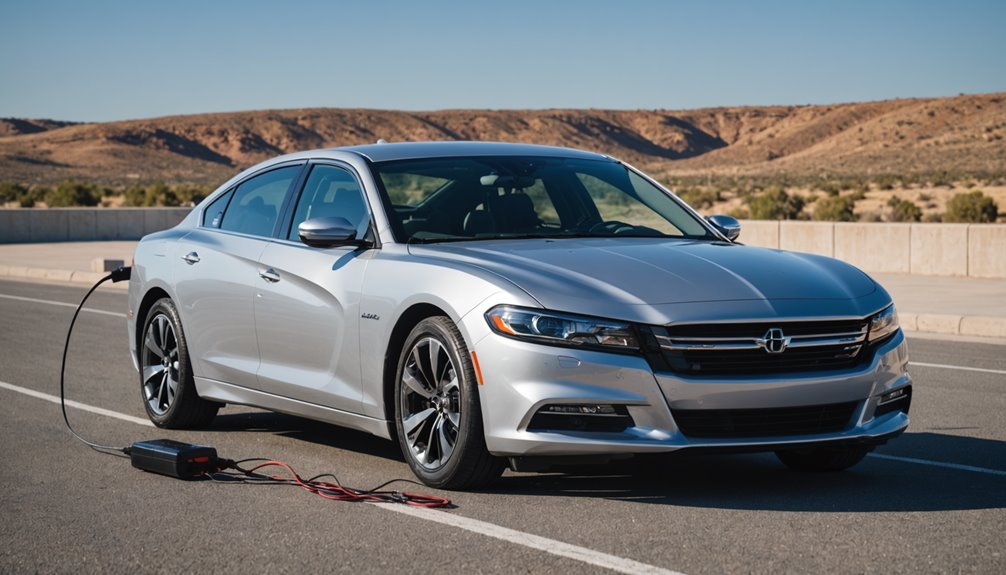
There are several charging methods you can use, depending on your situation and battery type. A trickle charger slowly charges your battery, making it perfect for maintenance or keeping a battery topped off when not in use.
On the other hand, a jump starter can provide a quick boost when your battery’s dead, allowing you to get back on the road in no time.
For a more thorough charge, a smart charger automatically adjusts the charge rate based on your battery’s needs, ensuring longevity.
When using any method, always check your battery’s specifications and follow the manufacturer’s recommendations. This way, you maximize efficiency and minimize the risk of damage.
Charging Time Estimates for Different Battery Types
Knowing how long to charge your car battery can greatly impact its lifespan and performance. Different battery types have varying charging times, which is essential to understand.
Here’s a quick overview:
- Lead-Acid Batteries: Usually take 4-8 hours for a full charge with a standard charger.
- AGM Batteries: Require about 5-7 hours, as they can charge faster than traditional lead-acid types.
- Lithium-Ion Batteries: Charge quickly, often in 1-3 hours depending on the charger used.
- Gel Cell Batteries: Similar to AGM, expect around 5-10 hours for a complete charge.
Knowing these estimates helps you plan charging sessions better, ensuring you’re never caught off guard with a dead battery.
Always consult your manufacturer’s recommendations for the best results, and remember to keep an eye on charging times to optimize your battery’s performance.
Signs of a Fully Charged Battery
Recognizing when your car battery is fully charged can save you time and prevent unnecessary wear on the battery. One clear sign is a steady green light on your charger or battery indicator; this suggests your battery has reached its ideal charge.
Additionally, if you notice the charger becomes less warm as it completes its cycle, that’s another indicator. You might also experience a slight increase in voltage; if you have a multimeter, measuring around 12.6 volts or more indicates a full charge.
Finally, when you turn your ignition key and the engine starts up quickly without hesitation, it’s a strong sign your battery is ready to go.
Tips for Maintaining Battery Health
To keep your car battery healthy and extend its lifespan, regular maintenance is key. By following a few simple tips, you’ll help guarantee your battery performs at its best.
- Clean the terminals: Dirt and corrosion can hinder performance, so regularly check and clean the battery terminals using a baking soda solution and brush.
- Check fluid levels: If your battery is the maintenance type, keep an eye on the electrolyte levels. Top them off with distilled water if necessary.
- Avoid short trips: Frequent short trips prevent your battery from fully recharging. Try to combine errands to give your battery a chance to replenish.
- Test battery health: Periodically use a multimeter or take your car to a shop for a battery health check to guarantee everything’s in tip-top shape.
Following these tips will help maintain your battery’s health so you can avoid unexpected breakdowns.
When to Seek Professional Help
While regular maintenance can prolong your battery’s lifespan, there are times when it’s wise to seek professional help. If your battery keeps dying despite regular charges, this could signal a deeper issue.
Don’t ignore corrosion on the terminals or noticeable bulging in the battery case—these problems can lead to dangerous leaks or damage.
When you notice a burning smell or hear unusual noises while trying to start your car, turn to a professional. They’re equipped to diagnose issues that mightn’t be apparent to you, like problems with the alternator or electrical system.
If your battery’s more than three to five years old and shows signs of weakness, it’s a good idea to have it tested.
Professionals can recommend the best course of action, whether that’s a new battery or repairs. Trust your instincts; when in doubt, it’s better to get expert advice.
Frequently Asked Questions
Can I Charge My Battery While the Engine Is Running?
Yes, you can charge your battery while the engine’s running.
When the engine is on, the alternator produces electricity that can help replenish the battery’s charge. However, charging with the engine running may take longer than using a dedicated charger.
Just make sure you’re following safety precautions and using the right equipment.
If you notice any issues during the process, it’s best to stop and consult a professional.
What Happens if I Overcharge My Car Battery?
If you overcharge your car battery, it can lead to overheating, which damages the battery and reduces its lifespan.
You might notice a bulging case or leaking fluids. This can also cause excessive gassing, which may be dangerous if it ignites.how-long-do-car-batteries-last
In some cases, you could even end up with a battery failure, leaving you stranded.
Always monitor your charging process to avoid these risks and keep your battery healthy.
How Do Temperature Extremes Affect Charging Time?
Temperature extremes can greatly affect charging time. In cold weather, a battery’s chemical reactions slow down, making it take longer to charge.
Conversely, in high temperatures, the reaction speeds up, but it can also lead to overcharging if you’re not careful. You should monitor the battery closely in these conditions to guarantee peak performance.
Is It Safe to Jump-Start a Dead Battery?
Yes, it’s generally safe to jump-start a dead battery, as long as you follow proper procedures.
Make certain both vehicles are turned off, connect the jumper cables correctly red to dead battery and red to live battery, then black to live battery and black to a metal ground on the dead vehicle.
Just make sure you don’t touch the clamps together.
Once started, let the dead battery recharge a bit while running the engine.
Can I Use a Regular Charger for My AGM Battery?
You can use a regular charger for your AGM battery, but make sure it’s compatible.
AGM batteries need a charger that can handle their specific requirements, like the right voltage and charging characteristics.
If your charger doesn’t have an AGM setting, it mightn’t charge your battery properly or could even damage it.
It’s best to invest in a smart charger designed for AGM batteries for ideal performance and longevity.
Conclusion
To summarize, charging your car battery depends on various factors like battery type and charger output. By understanding these elements, you can better estimate how long the process will take. Remember to keep an eye on the signs of a fully charged battery and follow maintenance tips to extend its life. If you’re ever unsure or face issues, don’t hesitate to seek professional help. Keeping your battery in good condition guarantees you won’t get stuck with a dead one!how-much-does-a-car-weigh