Changing a car battery can seem intimidating, but with the right approach, it’s a manageable task. You’ll want to begin by gathering essential tools and understanding key safety precautions—these steps are critical. Following a precise method guarantees you avoid potential hazards, especially when dealing with electrical components. Ready to tackle the steps involved in battery replacement? Let’s get started with what you need first.
Key Takeaways
- Always wear safety goggles and insulated gloves to protect against battery acid during the replacement process.
- Disconnect the negative terminal first, followed by the positive terminal, to ensure safety.
- Clean the battery terminal connectors before placing the new battery in the compartment.
- Securely connect the positive terminal first, then the negative terminal after the new battery is installed.
- Test the new battery with a multimeter to ensure proper voltage levels post-installation.
Tools and Materials You’ll Need

Before changing a car battery, you’ll need a few essential tools and materials to guarantee a smooth process. First, gather a wrench or socket set, preferably metric, to remove the battery terminals. A pair of insulated gloves will protect your hands from battery acid and electrical shock. A battery terminal cleaner or wire brush is vital for ensuring good connections on the new battery. You’ll also need a new battery suited for your vehicle’s specifications, which you can find in the owner’s manual. To keep the battery steady while you work, consider a battery strap or holster. A multimeter may also come in handy for checking voltage levels during the replacement. Finally, have a towel or absorbent cloth on hand to wipe away any spills. By organizing these tools and materials beforehand, you’ll streamline the battery replacement process and avoid unnecessary interruptions.
Safety Precautions Before Starting

As you prepare to change your car battery, it’s essential to take specific safety precautions to protect yourself and the vehicle. First, verify the engine is turned off and the keys are removed from the ignition to prevent any accidental starting. Wear safety goggles and gloves; this protects your eyes and skin from battery acid, which can cause severe burns. Locate the battery in a well-ventilated area to avoid the buildup of explosive gases during the process. Identify the positive and negative terminals clearly, as reversing connections can cause sparks or damage. Make certain there are no flammable materials nearby, as battery terminals can generate heat. Finally, if you have a carbon monoxide detector, verify it’s functioning, especially if you’re working in an enclosed space. These precautions minimize risks, enabling you to focus on the task ahead.
Step-by-Step Guide to Changing the Battery

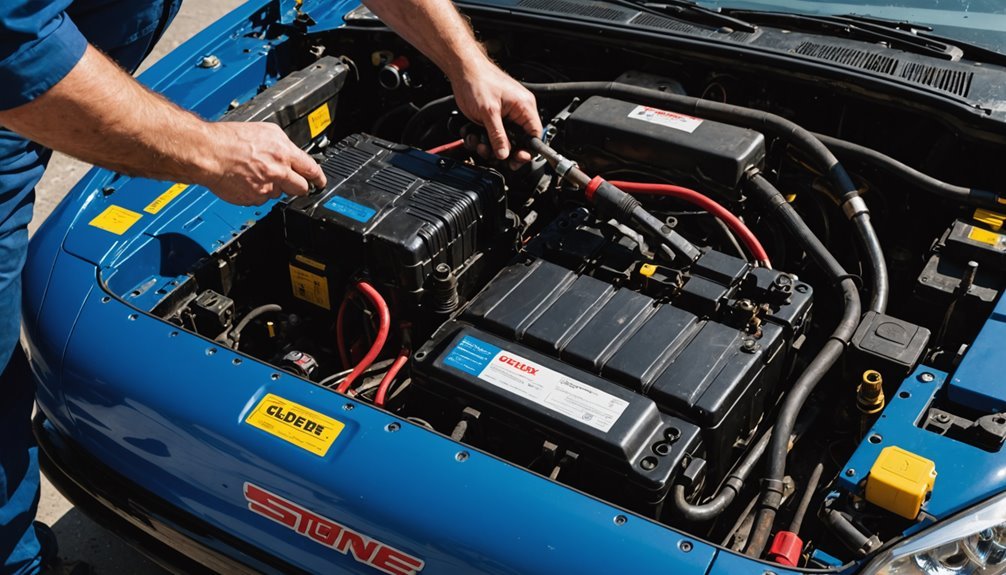
To change your car battery, start by gathering the necessary tools: a socket wrench, battery terminal cleaner, and a microfiber cloth. Begin by making sure your vehicle is turned off and parked on a level surface. Open the hood and locate the battery. Use the socket wrench to loosen the negative (-) terminal first, then remove it completely. Repeat this for the positive (+) terminal.
Carefully lift the old battery out, handling it with care due to its weight. Before placing the new battery in, clean the terminal connectors with the battery terminal cleaner and a microfiber cloth for better conductivity.
Position the new battery in the tray, making certain it’s secure. Reconnect the positive (+) terminal first, tightening it firmly, followed by the negative (-) terminal. Double-check both connections to make sure they’re secure. Finally, close the hood, and you’re ready to start your vehicle.
Testing the New Battery
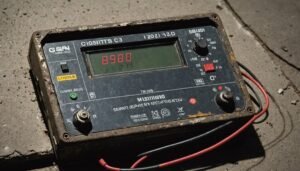
Once you’ve installed the new battery, it’s essential to test it to confirm it’s functioning properly. Start by verifying all connections are tight; loose connections can lead to poor performance. Next, turn on the vehicle and observe any warning lights. If everything looks good, proceed with a multimeter test to measure voltage.
Here’s a simplified table demonstrating the expected voltage ranges for different battery states:
| Test Condition | Expected Voltage | Status |
|---|---|---|
| New Battery | 12.6 – 12.8 V | Fully Charged |
| Engine Running | 13.7 – 14.7 V | Charging Properly |
| Low Battery | Below 12.4 V | Needs Charging |
If the voltage is outside these ranges, you might need to check your connections or consider getting the battery checked further. Proper testing confirms reliability and prevents future issues.
Proper Disposal of the Old Battery
Improper disposal of your old car battery can have serious environmental consequences, so it’s essential to handle it correctly. Car batteries contain hazardous materials like lead and sulfuric acid, which can pollute soil and water if not disposed of properly. Always take your old battery to a recycling facility or an automotive store that accepts battery returns.
Improperly disposing of car batteries can harm the environment—always recycle them responsibly.
Here are some options for responsible disposal:
- Local Recycling Centers: Search for facilities that specialize in battery recycling, ensuring they follow environmental regulations.
- Automotive Retailers: Many auto parts stores offer battery recycling programs, often providing a discount on your new battery when you return your old one.
- Hazardous Waste Collection Events: Participate in local events specifically designed for hazardous waste disposal, allowing you to safely drop off your battery.
Frequently Asked Questions
How Do I Know if My Battery Needs Replacing?
You’ll know your battery needs replacing if your vehicle struggles to start, especially in cold weather. Pay attention to dimming headlights or electrical issues. Check for corrosion around battery terminals or bulging sides on the battery itself. If your battery’s over three years old, have it tested at a shop; most offer free testing. A noticeable decrease in performance or requiring frequent jump-starts is another strong indicator for replacement.
Can I Change My Car Battery in Cold Weather?
Yes, you can change your car battery in cold weather, but you’ll need to take extra precautions. Cold temperatures can reduce battery efficiency and make the process trickier. Make sure you’re dressed warmly and use insulated gloves. If possible, park the car in a garage to mitigate the cold. Keep tools handy and prepare for potential difficulties in removing corroded terminals or a tight fit, as the cold may stiffen components.
Will Disconnecting the Battery Reset My Radio Settings?
Disconnecting your car battery’s like pulling the plug on a computer—temporary knowledge loss occurs! When you disconnect the battery, it often resets electronic components, including your radio settings. So, you’ll likely find that you need to re-enter your radio presets or codes once you reconnect the battery. Always consult your owner’s manual for specific instructions, especially if your radio requires a security code to operate after a reset.
How Long Does a Typical Car Battery Last?
A typical car battery lasts between three to five years, depending on various factors like climate, driving habits, and maintenance. If you frequently short trips or live in extreme temperatures, it may wear out sooner. Regularly checking the battery’s charge and terminals can help extend its lifespan. It’s wise to keep an eye on signs of deterioration, such as slow engine cranking or electrical issues, signaling it might be time for a replacement.
Is It Safe to Jump-Start a Dying Battery?
Yes, jump-starting a dying battery is generally safe and could save your day—but it’s not without its risks! Make sure you’re using proper cables, and connect them in the correct order to avoid sparks or damage. Always wear safety goggles and gloves, since battery acid can be hazardous. Don’t let the dying battery linger too long; it’s best to test it after jump-starting, as it may need replacement soon.