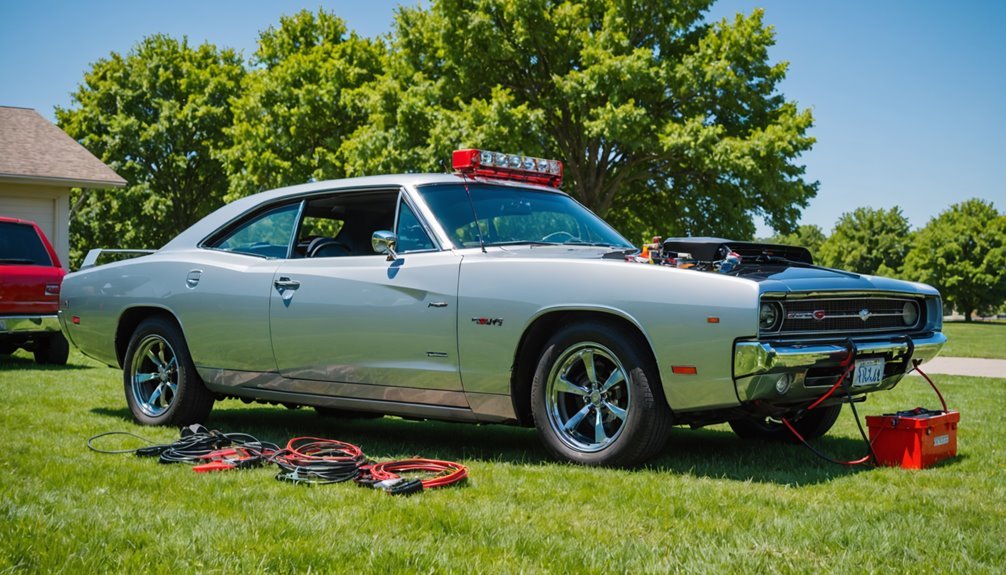
Charging a car battery requires a systematic approach to guarantee safety and effectiveness. Start by understanding your battery’s specifications and verifying that you have the correct charger. Remember to wear safety gear and work in a ventilated area. Each step, from preparing the battery to monitoring the charging process, plays a critical role. Missteps can lead to complications, so it is crucial to follow the correct procedure. Let’s explore the specifics of safely charging your car battery.
Key Takeaways
- Verify the battery type and voltage, typically 12 volts for lead-acid batteries, before selecting a compatible charger.
- Ensure a well-ventilated area and wear safety glasses and gloves during the charging process.
- Connect the charger: positive (+) clamp to the positive terminal first, then the negative (-) clamp to a grounded metal surface.
- Monitor the charging process and avoid overcharging; disconnect in reverse order: negative first, then positive.
- Regularly inspect the battery for damage and corrosion, and conduct annual tests for overall battery condition.
Understanding Your Car Battery

Understanding your car battery is essential for its longevity and performance. Your vehicle typically uses a lead-acid battery, which consists of six cells filled with electrolyte fluid. Each cell generates about 2 volts, providing a total of approximately 12 volts for your car.
Battery capacity, expressed in amp-hours (Ah), indicates how long your battery can deliver a specific current before discharging. Monitor the state of charge (SOC); a fully charged battery should sit around 12.6 volts. When the voltage drops below 12.4 volts, consider recharging.
Pay attention to the battery’s age and condition; most lead-acid batteries last about 3 to 5 years. Factors such as temperature extremes and frequent short trips can reduce lifespan. Regularly inspect for corrosion on terminals and make sure connections are tight. By understanding these elements, you can maintain your battery effectively, ensuring peak starting performance and vehicle reliability.You can learn more about how-fast-does-a-formula-1-race-car-go
Safety Precautions Before Charging
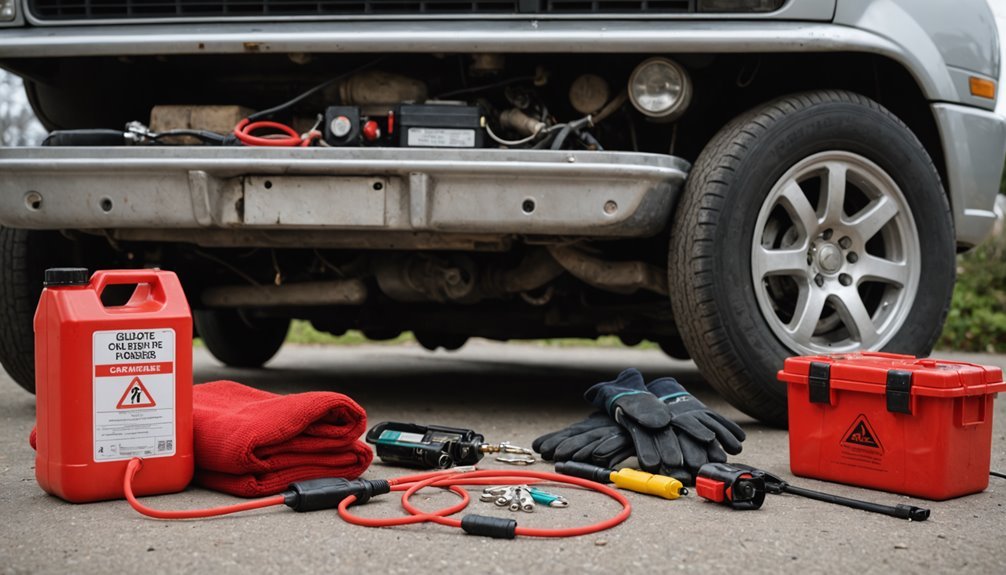
Before you start charging your car battery, it’s important to take specific safety precautions to avoid potential hazards. First, verify the area around your vehicle is well-ventilated. Fumes emitted during charging can be hazardous. Next, wear safety glasses and gloves to protect your eyes and skin from corrosive battery acid.
Always check the battery for any signs of cracks, leaks, or corrosion before connecting a charger. If you spot any damage, don’t attempt to charge the battery; replace it instead. Additionally, remove any metal objects from your pockets to prevent accidental contact with battery terminals.
Be certain the charger is unplugged while you connect it to the battery; this prevents sparks. Finally, read the charger’s manual for specific instructions and warnings. Following these safety measures will help minimize risks and facilitate a safe charging process.
Choosing the Right Charger

After ensuring you’ve taken the necessary safety precautions, the next step is selecting the right charger for your car battery. Start by determining the battery type—most common are lead-acid and AGM. Check the voltage; most car batteries are 12 volts, but you’ll need to confirm this.
Next, look at the charger’s amperage output. If you’re in a hurry, a higher amperage will charge your battery faster, but it may generate more heat. For regular maintenance, a lower amperage works better and is safer. Choose between automatic and manual chargers; automatic chargers are more user-friendly, as they adjust the charging process based on battery status.
Lastly, consider features like overload protection and battery type compatibility. Investing in a smart charger can provide additional safety and efficiency. Once you’ve found the right charger, you’ll be better equipped to restore your battery’s power effectively.
Preparing the Battery for Charging
Often, preparing the battery for charging involves a few essential steps to guarantee safety and effectiveness. Start by ensuring the vehicle is turned off and removing the keys from the ignition. Then, inspect the battery for any visible damage or leaks. If you notice corrosion around the terminals, clean it off with a solution of baking soda and water before proceeding. Always wear safety goggles and gloves during this process.
Next, check the electrolyte levels if your battery is serviceable. If they’re low, add distilled water as needed.
Here’s a quick reference table for preparation checks:
| Task | Status |
|---|---|
| Inspect Battery Damage | / |
| Clean Terminals | / |
| Check Electrolyte Levels | / |
Once these steps are complete, you’re ready to move on to charging your car battery safely.
Charging Your Car Battery
With the battery prepared, connecting it to a charger is the next step. Follow these procedures carefully to guarantee safe and effective charging:
- Use the right charger: Verify it’s compatible with your battery type.
- Check connections: Securely connect the positive (+) clamp to the battery’s positive terminal first.
- Connect the negative (-) clamp: Attach it to a grounded metal surface away from the battery.
- Monitor charging progress: Keep an eye on the charger’s indicators to avoid overcharging.
- Disconnect safely: Always remove the negative clamp first, followed by the positive.
During charging, maintain ventilation to disperse potentially harmful gases. Avoid touching the clamps while connected to reduce electric shocks. Charging time varies based on the charger and battery condition, so patience is key. Once complete, safely stow the charger and check the battery’s condition before putting it back in your vehicle.
Checking the Battery Voltage
Checking your car battery’s voltage is essential for evaluating its health and performance. Begin by gathering a multimeter, guaranteeing it’s set to measure DC voltage. With the car off, connect the red (positive) probe to the battery’s positive terminal and the black (negative) probe to the negative terminal. A healthy battery should read between 12.4 to 12.7 volts. If your reading is below 12.4 volts, the battery may need charging.You can learn more about how-to-get-smoke-smell-out-of-car
Next, if you want a more accurate assessment, check the voltage while the engine is running. A good voltage range here is 13.7 to 14.7 volts, indicating that the alternator is charging the battery properly. If the reading is lower than 13.7 volts, further inspection may be needed. Always take care when handling battery terminals and guarantee proper safety measures are followed to avoid accidents or short circuits.
Maintaining Your Car Battery
After confirming your battery’s voltage is within the acceptable range, maintaining it is key to extending its lifespan and performance. Regular maintenance confirms your vehicle runs smoothly and helps prevent unexpected breakdowns. Here are some essential steps you can take:
- Inspect battery terminals for corrosion and clean them as needed.
- Check electrolyte levels in non-sealed batteries and top-up with distilled water if low.
- Secure the battery to prevent vibrations that can damage internal components.
- Test your battery periodically to check its health and performance.
- Avoid short trips, as frequent start-stop can drain your battery faster.
Troubleshooting Charging Issues
How can you tell if your car battery isn’t charging properly? Start by observing the dashboard lights; if they’re dim or flickering, it could indicate a charging issue. Next, pay attention to starting your engine. Difficulty cranking or a clicking sound when turning the key are signs your battery may not be charged.
To diagnose further, use a multimeter to check the battery voltage. A healthy battery should read around 12.6 volts when fully charged. If it’s lower than 12.4 volts, it’s undercharged.
Next, examine the connections. Corroded or loose terminals can disrupt charging. Clean and tighten them if necessary.
You should also consider testing the alternator. If your battery charges but drains quickly, the alternator might not be delivering power effectively. Monitor these elements closely, and you’ll be better positioned to identify where the problem lies.
When to Replace Your Car Battery
When should you consider replacing your car battery? Recognizing the signs of a failing battery can prevent inconvenient breakdowns. Here are key indicators to watch for:
- Age: If your battery’s older than 3-5 years, it may need replacing.
- Slow engine crank: A sluggish start could signal battery failure.
- Check engine light: If this light appears and you’ve ruled out other issues, your battery might be to blame.
- Corrosion: Excessive corrosion around terminals indicates deterioration.
- Frequent jump-starts: Needing to jump your battery multiple times is a clear warning sign.
Frequently Asked Questions
Can I Charge a Battery Without Removing It From the Car?
Yes, you can charge a battery without removing it from the car. Just connect a portable jump starter or a battery charger directly to the terminals. Are you ensuring the charger is compatible with your vehicle’s battery type? Make sure the car is off, then follow the charger’s instructions. Monitor the charging process, and disconnect the charger once it’s complete. This method saves time while maintaining safety, so you can get back on the road quickly.
How Long Does It Take to Fully Charge a Car Battery?
It generally takes about four to six hours to fully charge a car battery using a standard charger. The actual time may vary depending on the battery’s current charge level and the charger’s output. If you’re using a trickle charger, it might take longer. Always check your battery’s specifications for ideal charging times and verify connections are clear to avoid delays. Regular monitoring helps maintain battery health during the charging process.
What Happens if I Overcharge My Car Battery?
Overcharging your car battery’s like pouring too much water into a glass—it overflows and causes a mess. When you overcharge, the battery heats up excessively, leading to damage like warped plates or leaks. This increases the risk of a battery rupture and can also create dangerous hydrogen gas. To avoid these hazards, always monitor the charging process and use a smart charger that can prevent overcharging.
Can I Jump-Start My Car Instead of Charging the Battery?
Yes, you can jump-start your car instead of charging the battery. This process involves using jumper cables and a functioning vehicle to help start your car. Make sure both vehicles are off, connect the positive terminals first, then the negative. Start the working vehicle and let it run for a few minutes. This provides enough power to your dead battery to start your engine. Afterward, consider having the battery tested for overall health.
Is It Safe to Charge a Battery in Extreme Temperatures?
Charging a battery in extreme temperatures isn’t safe; it’s like trying to cook a meal on a stove with no flame. When it’s too hot, the battery can overheat and potentially explode. Conversely, in cold conditions, the charging process slows down, risking damage. Ideally, aim for moderate temperatures. If you must charge in extreme weather, monitor the battery closely to avoid hazardous situations. Always prioritize safety over sticking to a schedule.